Endless Puncher
- 2.1
- Rating
- 100.00K
- Installs
- Free
- Price

 Analysis by App-foxy
I approached Endless Puncher as a quick action game rather than a deep fighting simulator. Its basic idea is easy to understand: keep punching, react to what appears on screen, and try to maintain a useful rhythm for as long as possible. That simplicity is both its appeal and its biggest limitation. I could start a session without learning a complicated control scheme, but I also noticed that the experience depends heavily on whether I was in the mood for short, repetitive bursts instead of a layered combat system.
Rollic Games presents this as an endless puncher, and that description sets the right expectation. This is not the kind of game I would choose for a long story campaign, character-building journey, or tactical match against another player. It fits better into the small spaces of a day: waiting for an appointment, taking a short break, or wanting something physical and immediate without having to remember a large set of rules.
The game is free to download and is rated for Everyone 10+, which makes it approachable for a broad audience. It has passed the 100K+ install mark, yet its average rating is 2.1 from roughly 600 ratings, with more than 150 written reviews. That combination tells me to treat it as a very specific kind of casual action game, not as a universally polished recommendation. I enjoyed the directness, but I would advise anyone who dislikes repetition or aggressive monetization to examine the experience carefully before committing time or money.
You May Also Like

 AccuWeather: Weather Radar
AccuWeather Review: A Quick, Clear Forecast for Everyday Decisions
For everyday plans, the best forecast is the one you can understand quickly. AccuWeather makes rain timing, radar, and local conditions easy to act on, with a few trade-offs.

 Hill Climb Racing
Why Hill Climb Racing Still Turns Crashes Into One More Run
A tiny car, a bumpy hill and one more upgrade: Hill Climb Racing keeps resurfacing because its simple chaos makes every near-miss feel personal.

 AliExpress - Shopping App
AliExpress Makes Global Shopping Feel Personal, but Shoppers Bear the Risk
AliExpress turns a global marketplace into a pocket-sized discovery engine. Its reach is useful, its shopping loop compelling, and its trade-offs easy to miss.

 Lords Mobile: Kingdom Wars
Lords Mobile Is a Kingdom-Building Routine, Not a Quick Match
A case-by-case verdict on the building, battles, device demands, and social commitments that make Lords Mobile rewarding for some players and exhausting for others.

 PDF Scanner app - TapScanner
TapScanner Makes Paperwork Easier to Capture, Check, and Share
TapScanner makes scanning with a phone feel less like a rescue operation and more like a dependable step in getting work done. Its capture tools are useful, though not flawless.

 Block Blast!
 Shows How Much a Puzzle Game Can Leave Out
A quiet grid game shows why puzzle players increasingly value instant clarity, repeatable skill and low-pressure play—and where the genre still needs to catch up.
More From Our News Desk
View All News


How a normal session feels from the first punch
The baseline workflow is refreshingly simple. I open the game, begin a run, focus on the immediate punching task, and decide whether to continue or stop after the current attempt. There is no need to schedule a long play session. The short-loop structure makes it easy to pick up after a few hours away, because the core action does not ask me to remember a complicated plot or a large inventory.
That accessibility is useful, but it also means the first few sessions reveal most of the basic appeal. The game does not hide a broad adventure behind a slow opening. Instead, it asks whether repeating the same central action can remain satisfying as I improve my timing and consistency. If that loop feels good to you, the lightweight format works. If you need frequent changes of scenery, elaborate objectives, or a strong sense of progression, the foundation may feel thin.
I found it most enjoyable when I treated each attempt as a small personal challenge rather than expecting a complete arcade campaign. A good everyday scenario is a short commute break: I can play for a few minutes, stop before the session becomes tiring, and return later without needing a detailed plan. It is less suitable when I want a game that rewards a quiet evening with new story content or a meaningful strategic decision.
The controls and objectives are deliberately easy to grasp, but that does not automatically make every run effortless. The useful skill is learning to stay attentive without rushing. My first instinct was to tap or act as quickly as possible, yet a steadier rhythm was easier to maintain. I began watching the screen for the next clear opportunity instead of treating every moment as a command to attack.
What I check before settling into a routine
I recommend spending the first few minutes learning the game’s response rather than immediately chasing a high result. I pay attention to whether my actions register consistently, how much visual space is devoted to the active target, and whether interruptions make me lose my rhythm. This small test matters because an endless action loop can feel very different depending on the phone’s screen size, touch sensitivity, and the amount of attention available.
Settings deserve a quick inspection before serious play, even though I would not expect them to transform the game. I look for any available sound controls and reduce distractions when I am playing in a public place. I also make sure the screen is clean and hold the phone in a way that leaves my active finger away from accidental touches. These are ordinary habits, but they have a noticeable effect in a game where a careless input can break concentration.
I would also check the device’s general notification behavior before starting a longer run. A message banner or incoming call can be more damaging here than in a turn-based game because the action depends on a continuous visual rhythm. I do not assume that the game can protect a run from every interruption, so I prefer short sessions when I am expecting messages.
Another practical check is whether the current version behaves comfortably on the device. The listed version is 1.6.01 and the minimum operating-system requirement is Android 7.1. That makes the compatibility range fairly broad for Android users, but compatibility alone does not guarantee that every older phone will feel equally responsive. I would judge the game by touch response and stability on the actual device, not just by the operating-system requirement.
Sound is worth treating as a tool rather than decoration. If the effects help me recognize successful punches, I keep them at a modest level. If they become repetitive, I lower them and rely more on visual timing. In a public setting, silent play may be more comfortable, but it can also remove feedback that helps maintain a consistent pace. I prefer to test both rather than assuming one mode is always better.
Repeatable patterns that make the action less tiring
My most useful improvement was replacing frantic speed with a repeatable pattern. I use a simple cycle: identify the next opening, make the input, confirm the result visually, and only then prepare for the following action. This sounds obvious, but it prevents the common mistake of sending several rushed inputs before the previous one has clearly registered.
Keeping the phone stable is another small advantage. When I play while walking or holding the device loosely in one hand, my attention divides between movement and the screen. For better results, I rest the phone securely and use the same finger position from one attempt to the next. That consistency helps me distinguish a genuine timing mistake from an awkward grip.
I also prefer a fixed session goal. Instead of playing until I become frustrated, I decide in advance to complete a short attempt or to stop after my concentration drops. This is especially helpful because the endless format can encourage “one more try” behavior without offering a clear natural ending. A limit keeps the game in its best role as a quick break rather than allowing a repetitive loop to consume more time than I intended.
Experienced players will probably benefit from reviewing their own mistakes immediately after an unsuccessful run. I ask myself whether I acted too early, reacted too slowly, or simply lost focus because the session had gone on too long. That reflection is more useful than blindly restarting. It turns each attempt into a small experiment and makes improvement feel connected to a specific habit.
There is also a trade-off between speed and reliability. A faster rhythm may look impressive, but a slightly slower pattern that avoids careless misses can be more satisfying and more sustainable. I would rather build a dependable pace first and then increase it gradually than chase maximum speed from the beginning. The game’s simple premise leaves room for this self-imposed discipline, even if it does not provide the depth of a traditional fighting game.
For touch players, I suggest avoiding unnecessary movement between actions. Keeping the active finger close to the usual input area reduces wasted motion. I would not call this a hidden shortcut, because it is simply good touchscreen technique, but it is one of the few ways to make the basic loop feel more controlled. The benefit becomes clearer when the screen demands quick attention and the player is tempted to jab at random locations.
Where the free model changes the decision
The free entry point is helpful because I can test the central loop without paying first. However, the in-app purchase range extends from $2.99 to $179.99 per item, so I would approach optional spending with care. A free download does not mean the entire experience will feel free of commercial pressure, and the wide range between the smallest and largest listed items is enough reason to review every purchase prompt before confirming anything.
My advice is to play several short sessions before considering an in-app purchase. First decide whether the basic punching loop remains enjoyable without assistance. If the answer is no, spending more is unlikely to solve the underlying problem. If the answer is yes, I would still ask what the purchase changes in practical terms and whether it improves enjoyment or merely encourages longer sessions.
This is one area where Endless Puncher differs from many conventional action alternatives. A premium arcade game may ask for money at the beginning but then provide a clearer, more settled experience. A competitive fighting game may offer deeper controls and match variety. An endless runner may provide more movement choices and environmental change. Endless Puncher is easier to start than those options, but its simplicity makes monetization and repetition more noticeable.
I would be particularly cautious about playing when tired or distracted. A game built around repeated actions can make spending feel like a shortcut to reducing friction, even when the better choice is simply to stop. I keep purchases separate from the decision to continue a run: first I decide whether I genuinely want to keep playing, then I consider whether an optional item is worth it. That habit prevents the game’s momentum from making the decision for me.
Who gets the most from this particular action game
I can recommend it to someone who wants immediate, uncomplicated action and enjoys improving through repetition. It is a good fit for players who like testing their reactions, refining a rhythm, and squeezing a small challenge into an otherwise busy day. The age rating of Everyone 10+ also makes it more approachable than many combat games, although parents should still be aware that optional purchases are present.
It is less convincing for players who want a complete combat system. If you are looking for a roster of fighters, careful matchup strategy, story progression, online competition, or a large collection of unlockable techniques, this is probably not the right destination. A dedicated fighting game will offer more expressive control, while a traditional arcade title may provide more variety between attempts.
I would also skip it if repetitive action quickly becomes irritating. The endless structure does not disguise its central loop, and no amount of careful technique changes the fact that punching remains the main activity. That honesty is useful: the game is not pretending to be a broad adventure. You can decide quickly whether its narrow focus is attractive or boring.
For families, the age guidance is reassuring, but I would still explain that free games can include optional purchases. For older players using a smaller or less responsive phone, I would test the controls before forming an opinion. A game that feels pleasantly immediate on one screen may feel less comfortable on another, particularly when a session depends on accurate, repeated touches.
The limits that become clearer with experience
After the initial novelty fades, the main question is whether the game gives me enough reason to return. The straightforward design makes it welcoming, but it can also reduce long-term variety. I found myself relying on self-created goals—better consistency, fewer rushed inputs, shorter focused sessions—because the basic concept alone does not provide the same breadth as a larger action title.
That is not necessarily a flaw for a casual game. Some players want exactly this kind of narrow, repeatable activity. The problem appears when expectations are mismatched. If I launch it expecting a deep progression system, I leave disappointed. If I launch it expecting a few minutes of direct interaction, it makes more sense.
The low average rating should also influence expectations. I would not use that figure as proof that nobody can enjoy the game, because my own response depends on how much I value simplicity. Still, it is a clear warning that the experience has not satisfied a large portion of the people who rated it. I would download it as a cautious trial, not as a guaranteed recommendation.
Another limitation is that the game’s strongest improvements come from player habits rather than from a large toolkit of advanced techniques. Stable grip, controlled timing, notification management, and sensible session limits all help, but they do not turn the title into a complex combat simulator. This is the important trade-off: the low learning barrier is also what caps the depth.
I would not choose it for a device-free social gathering, a long flight where I want sustained variety, or an evening dedicated to a substantial game. In those situations, a story-driven action game, a deeper fighter, or a puzzle title with multiple systems would give me more to explore. Endless Puncher works best when I want a focused action loop and already accept that the loop is the whole point.
My verdict after using the simple loop deliberately
Endless Puncher is easy to understand, quick to start, and capable of providing a satisfying few minutes when I approach it with realistic expectations. I like that I can focus on timing and rhythm without studying a manual. The most enjoyable way to play is to keep the phone steady, minimize interruptions, use a controlled pace, and stop before repetition turns into fatigue.
At the same time, I cannot overlook the narrow design, the uneven public response, and the presence of in-app purchases reaching $179.99 per item. Those details make it difficult for me to recommend without qualification. I would tell a friend to try the free version if they specifically enjoy endless reaction games, but I would not present it as a replacement for a full fighting game or a richer action adventure.
My final judgment is cautious rather than enthusiastic. Choose it for short, direct punching sessions, not for deep combat progression. If you enjoy turning small improvements into a personal challenge, the game can fit neatly into spare moments. If you need variety, story, strategic combat, or a more generous long-term structure, your time is better spent with a different action game. The right decision comes down to whether the simplicity feels refreshing to you or merely repetitive.
FAQs for Endless Puncher
01What is Endless Puncher, and how does the gameplay work?
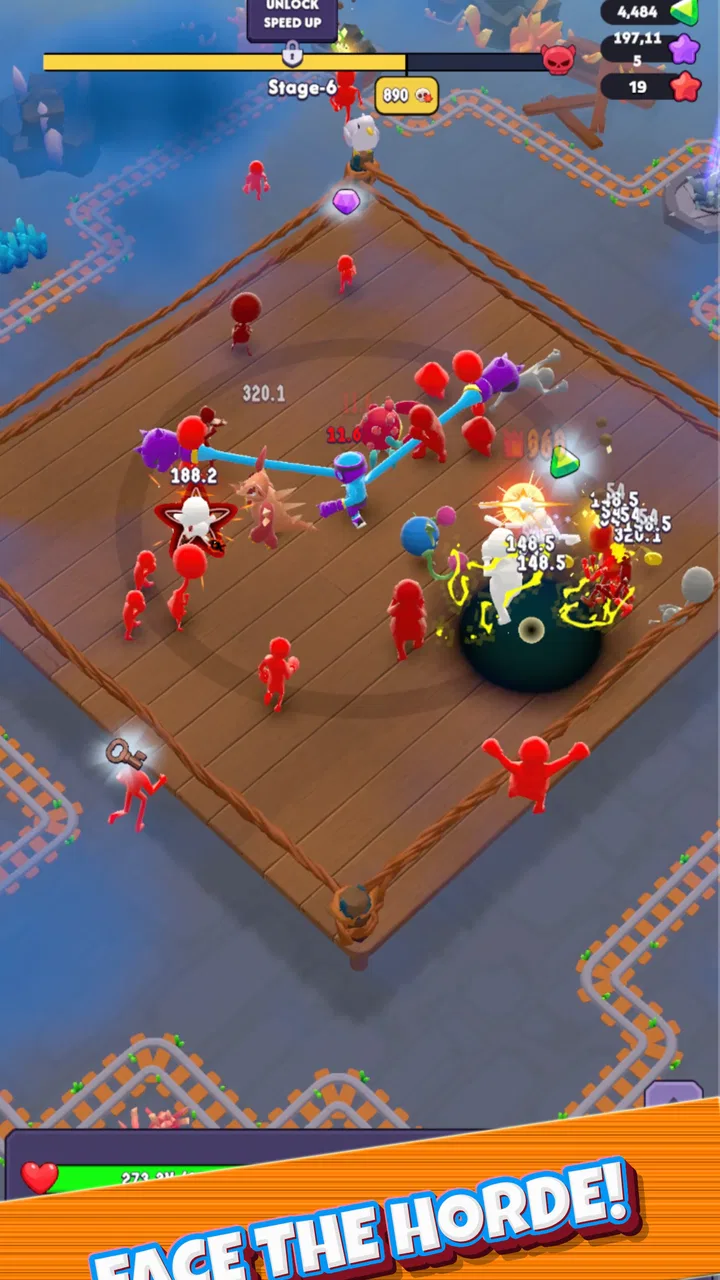
Endless Puncher is an arcade-style action game focused on fast reflexes, timing, and surviving as long as possible. After starting a run, you face continuous challenges and enemies while trying to land punches, avoid attacks, and maintain your progress. The controls are generally easy to understand, making it suitable for short sessions, although the increasing difficulty can make later stages considerably more demanding.
02Is Endless Puncher free to download and play?
Endless Puncher can generally be downloaded and played without an upfront purchase, but the exact monetization system may depend on the version available for your Android or iOS device. Some editions may include advertisements, optional purchases, or unlockable content. Before installing, it is worth checking the store listing for current information about ads, in-app purchases, permissions, and whether any features require payment.
03Does Endless Puncher require an internet connection?
The core gameplay of Endless Puncher may be playable offline, which is convenient when you want a quick game without using mobile data. However, certain features—such as advertisements, cloud synchronization, leaderboards, updates, or account-related services—can require an internet connection. Availability may vary by platform and version, so players should test offline access after installation rather than assuming every feature will work without connectivity.
04Is Endless Puncher suitable for children and casual players?
Endless Puncher is likely to appeal to casual players because its basic concept is straightforward and sessions can be started quickly. Nevertheless, parents should review the game’s age rating, visual style, advertising, and possible in-app purchases before allowing younger children to play. The repetitive action and progressively harder challenges may be enjoyable for some users, while others may find the gameplay demanding or limited in variety.
05What should I check before downloading Endless Puncher on Android or iOS?
Before downloading Endless Puncher, check that your device meets the required operating-system version and has enough free storage. It is also useful to review recent user feedback, the developer’s update history, privacy details, and the permissions requested by the app. Confirm whether your device region supports the game and whether advertisements or in-app purchases are included, especially if the application will be used by children.
Pros
- Simple controls make it easy to start playing immediately.
- Short runs fit well into quick breaks or commutes.
- Punching mechanics feel responsive and satisfying.
- Progression encourages repeated attempts and improvement.
- The lightweight gameplay runs well on many devices.
Cons
- Gameplay can become repetitive after extended sessions.
- Limited variety may reduce long-term replay value.
- Difficulty may feel uneven as challenges increase.
- Ads can interrupt the experience for some players.
- Some upgrades may require considerable grinding.

Endless Puncher
Gallery